Science
11 min read
Siloxanes in Cosmetics: India’s Beauty Safety Blind Spot
September 25, 2026Read
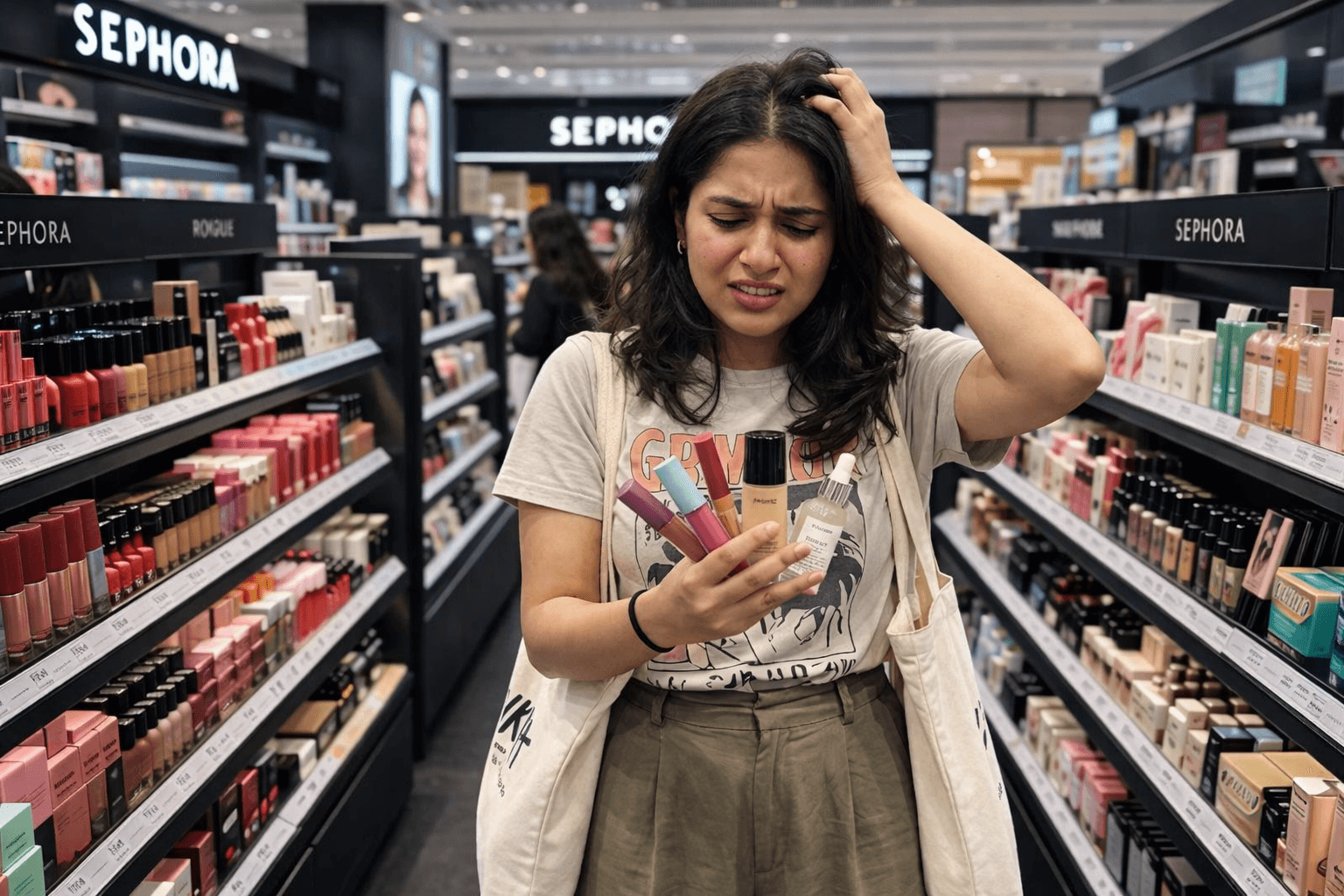
How to spot BS claims on Instagram, decode your INCI list, and stop falling for marketing that has literally zero science behind it.
Let's get one thing out of the way: "chemical-free" is not a thing. Water is a chemical. You are chemicals. Everything your favourite influencer-turned-skincare-founder puts in that pastel bottle with the minimalist font? Chemicals. Every single molecule.
And yet brands keep slapping it on labels because it works. It makes you feel like you're choosing something pure, something safe, something better. But here's the plot twist nobody in your Instagram feed is talking about: regulators in India, the EU, and the US are finally done watching from the sidelines. They're coming for the claims. And it's about to get messy.
For years, beauty marketing in India operated on vibes. Slap "natural" on the label, add a leaf graphic, film a reel with golden hour lighting, done. No one checked. No one asked "natural compared to what?" or "tested by whom, exactly?"
That era? Expired. India's Central Consumer Protection Authority started issuing notices to beauty brands for misleading claims. The ASCI processed a record number of beauty-related complaints in 2025. And the EU is requiring documented evidence for every single green claim a brand makes.
If your favourite serum says "clinically proven," there better be an actual clinical study behind it. Not a vibe. Not an in-house "panel." A real, documented, peer-reviewed or IRB-approved study.
Here's a cheat sheet. If you see any of these on a product you own, it's worth a second look:
None of this means every brand using these terms is evil. Some brands genuinely reformulate and test rigorously. But the ones that don't? They've been getting away with it for years. That window is closing.
Here's something wild: the law governing every beauty product sold in India was written in 1940. Before independence. Before SPF was a thing. Before the concept of "active ingredients" even existed in mainstream skincare.
The Drugs and Cosmetics Act of 1940 is finally being replaced by the Drugs, Medical Devices and Cosmetics Act 2025, which was presented to the Union Health Ministry in October 2025. When it reaches Parliament, it will be the most significant overhaul of cosmetics regulation in India in 85 years.
What does that mean for you? CDSCO, India's central regulator, will get statutory power to enforce immediate product recalls. BIS certification is expected to go mandatory for cosmetics by end of 2026. Brands that have been operating without verified safety documentation are about to face a legal reckoning.
The gap between brands that did the work and brands that faked it is about to become legally enforceable.
Regulation is catching up, but it's not here yet. For the next 12-18 months, compliant and non-compliant products will sit side-by-side on the same shelves and in the same Instagram ads. So here's what you can do right now:
The beauty industry in India is at a turning point. The brands that built their business on genuine formulation rigour, proper documentation, and ingredient transparency are about to be vindicated. The ones that coasted on aesthetics and ambiguity are about to be exposed.
You don't need to become a cosmetic chemist. But you do need to stop trusting packaging at face value. The information is there. The regulation is coming. And the brands that are worth your money? They'll welcome the scrutiny.
The rest will rebrand. Again.
Not sure what's actually in your products?
Check Your IngredientsIndia's regulatory landscape is changing. The Clean Sheet™ certification separates compliant brands from those flying blind. The founding cohort is open now.
Join The Clean Sheet™ community
Science-backed beauty tips, ingredient alerts, and early access. Straight to your WhatsApp.
Join for free →