Getting you a comprehensive analysis of the product
Reading every ingredient in the formula…
Getting you a comprehensive analysis of the product
Reading every ingredient in the formula…
Join The Clean Sheet™ community
Science-backed beauty tips, ingredient alerts, and early access. Straight to your WhatsApp.
Join for free →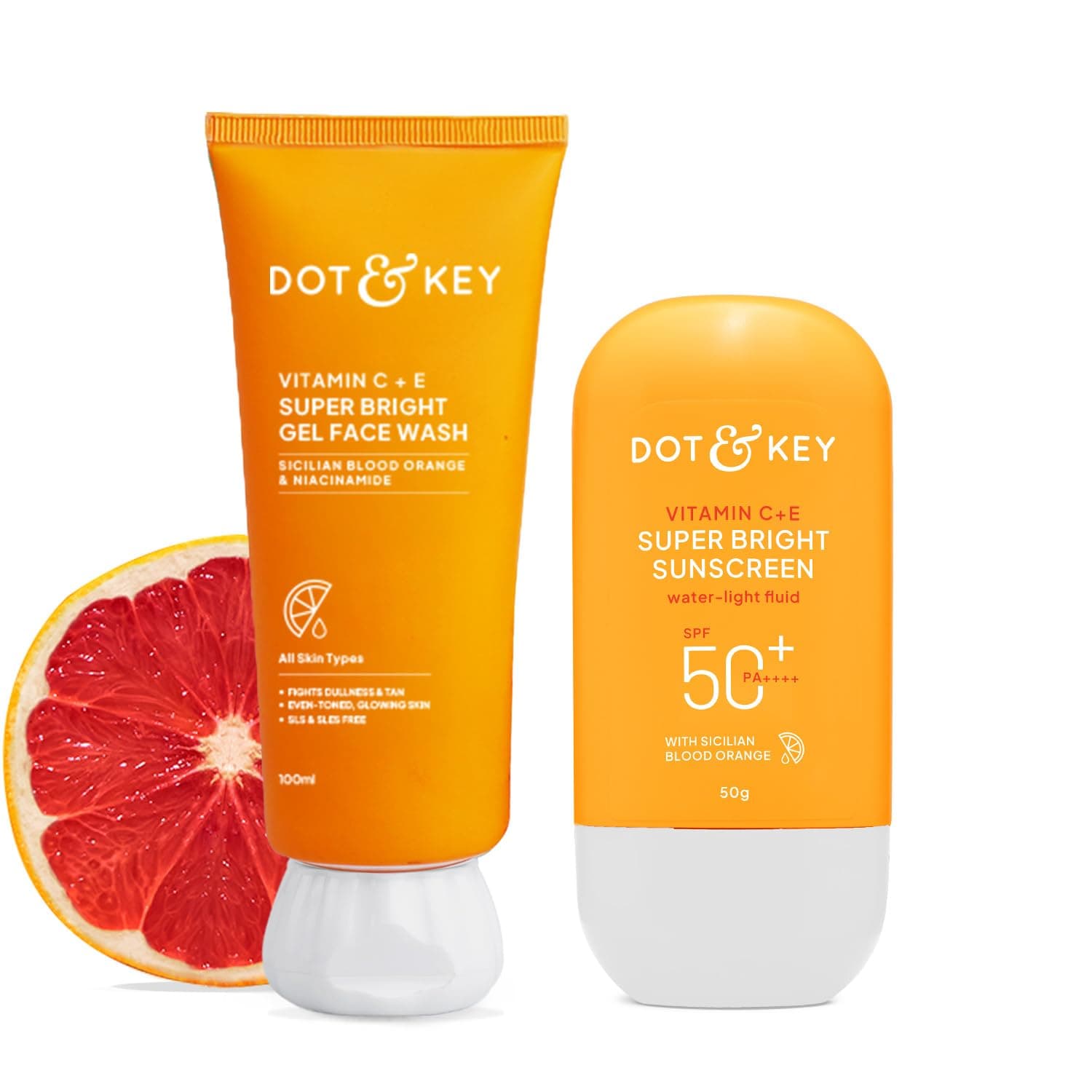
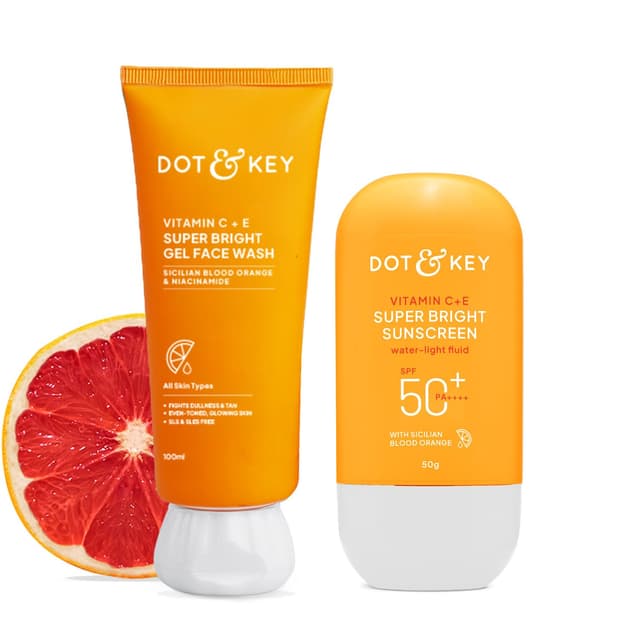
This sunscreen delivers excellent, proven sun protection with a desirable texture for Indian conditions, but some of its more ambitious claims, particularly regarding Vitamin D activation, outrun the publicly available evidence.
₹263 • Analysed 22 October 2026
This Dot & Key sunscreen is positioned as a daily essential for Indian consumers, offering high SPF 50+ PA++++ protection crucial for India's high UV index. Its 'no white cast' and 'water-light' claims are particularly appealing in humid climates, addressing common concerns with sunscreens. The inclusion of Vitamin C and Blood Orange aligns with the strong market demand for brightening and anti-pigmentation products among Fitzpatrick III-V skin types. The 'Activates Vitamin D receptors' claim, while ambitious and lacking public evidence, taps into a common consumer dilemma about sun exposure and Vitamin D synthesis.
Independent and free. The Clean Sheet takes no money from brands to analyse, rank, or approve a product. This is a web evidence analysis, not a Clean Sheet certification. We checked the ingredient list, publicly available test reports, marketing claims, and formula logic using only public information available at the time of analysis.
Repeatedly stated as 'In-vivo Tested SPF 50+ PA++++' across multiple platforms and reviews. Dermatocare review explicitly states 'In-vivo test published for SPF 50 and PA rating PA++++'.
UV filters (Ethylhexyl Methoxycinnamate, Butyl Methoxydibenzoylmethane, Benzophenone-3, Titanium Dioxide) are present in the INCI to cover UVA/UVB. Blue light protection is a common claim for sunscreens with antioxidants, but specific finished-product testing for blue light is not publicly detailed. Dermatocare notes it 'does not cover Blue light'.
Contains Ascorbyl Glucoside (Vitamin C derivative), Tocopheryl Acetate (Vitamin E), and Citrus Sinensis (Blood Orange) Fruit Extract, which are known antioxidants and skin brighteners. Niacinamide is also present. These ingredients support the claim at an ingredient level, but specific finished-product studies on this formula for pigmentation and collagen boosting are not publicly visible.
Widely praised by user reviews and brand descriptions for its water-light texture and invisible finish on all skin tones. The formulation with chemical filters and micronized Titanium Dioxide supports this claim.
This is a highly ambitious claim. While some sunscreens are formulated to allow Vitamin D synthesis, no specific evidence or mechanism for 'activating Vitamin D receptors' for this product is publicly visible. This claim is often used to counter the perception that sunscreen completely blocks Vitamin D.
The retrieved INCI (Source 1) does not list 'Parfum' or 'Fragrance' or parabens, supporting the 'free-from' claims. 'Non-comedogenic' and 'Dermatologically tested' are stated, and 'In-vivo tested' is confirmed for SPF/PA, which often includes dermatological assessment.
Claimed on SastaSundar. This requires specific water resistance testing (e.g., ISO 16217 or FDA monograph). While the claim is made, the test report details are not publicly visible. The presence of film-forming agents in the INCI could support this, but direct evidence is needed for full substantiation.
What we could confirm from public sources and the verified ingredient list.
Ingredient Safety & Toxicity
Full ingredient list retrieved and verified against the label.
Screened against the ingredient database (18 of 28 ingredients matched); no cosmetics-prohibited ingredient found.
Ethylhexyl Methoxycinnamate: Most widely used UVB filter globally Benzophenone-3: Broad-spectrum UV filter benzophenone-3: Oxybenzone - flagged endocrine-active; EU restricts concentration.
No IARC-classified or formaldehyde-releasing ingredient found in the database screen.
Irritation & Allergen Risk
Declares 2 known allergen(s) (Ethylhexyl Methoxycinnamate, Benzophenone-3). Reactive skin should note these.
No high-sensitisation preservative (MI/MCI/formaldehyde-releaser) from our screen was found.
Brand claims dermatologist testing (claim stated; underlying report not seen).
Ingredient Transparency
The full INCI list is publicly available, not just hero ingredients.
Any proprietary 'complex' is broken down into its actual ingredients.
Ingredients are listed in the descending order required by India Cosmetics Rules 2020.
Standards & Compliance
Usage warnings and directions are clear on the label.
Sustainability & Ethics
Brand makes a cruelty-free / PETA claim.
Screened against a curated reference set that we are continuing to verify and expand, so “clear” means no flag from that set, not a guarantee. Not a substitute for a full toxicological or clinical assessment.
| Ingredient |
|---|
Aqua |
Ethylhexyl Methoxycinnamate |
Butyl Methoxydibenzoylmethane |
Benzophenone-3 |
Phospholipids |
Diethylhexyl Carbonate |
Titanium Dioxide |
Silica |
Glyceryl Citrate/Lactate/Linoleate/Oleate |
Caprylic/Capric Triglyceride |
Coco-Caprylate/Caprate |
Glycerin |
Propanediol |
Polyacrylate-13 |
Polyisobutene |
Polysorbate 20 |
Polyacrylate Crosspolymer 6 |
Ascorbyl Glucoside |
Fructooligosaccharides |
Beta Vulgaris Root Extract |
Tocopheryl Acetate |
Terminalia Ferdinandiana (Kakadu Plum) Fruit Extract |
Citrus Cinennsis (Blood Orange) Fruit Extract |
Phenoxyethanol |
Ethylhexylglycerin |
Trisodium Ethylenediamine Disuccinate |
Xanthan Gum |
Citric Acid |
INCI order as declared on packaging. Position reflects approximate concentration (high to low).
Benzophenone-3 (Oxybenzone) is a permitted UV filter in the EU up to 10% in face products, but it is a known sensitizer and has environmental concerns.
No prohibited ingredients identified. All UV filters are permitted. INCI order appears correct.
No prohibited or restricted ingredients identified.
Benzophenone-3 (Oxybenzone) is an FDA-approved active sunscreen ingredient. Ethylhexyl Methoxycinnamate (Octinoxate) and Butyl Methoxydibenzoylmethane (Avobenzone) are also FDA-approved. Titanium Dioxide is also FDA-approved.
No prohibited or restricted ingredients identified.
No prohibited or restricted ingredients identified.
No ingredients classified as Group 1 carcinogens.
No prohibited or restricted ingredients identified.
No prohibited or restricted ingredients identified.
No prohibited or restricted ingredients identified.
Flags are based on publicly available INCI only. Not a substitute for full regulatory compliance assessment.
“Activates Vitamin D receptors, making it beneficial to be in the sun”
This claim is highly specific and implies a physiological effect that would require robust clinical evidence to substantiate. Without disclosed methodology or study, it is an absolute claim that is difficult to verify and could be considered misleading under ASCI Chapter 1.
Repeatedly stated as 'In-vivo Tested SPF 50+ PA++++' across multiple platforms and reviews. Dermatocare review explicitly states 'In-vivo test published for SPF 50 and PA rating PA++++'.
Evidence visible
UV filters (Ethylhexyl Methoxycinnamate, Butyl Methoxydibenzoylmethane, Benzophenone-3, Titanium Dioxide) are present in the INCI to cover UVA/UVB. Blue light protection is a common claim for sunscreens with antioxidants, but specific finished-product testing for blue light is not publicly detailed. Dermatocare notes it 'does not cover Blue light'.
Evidence visible
Contains Ascorbyl Glucoside (Vitamin C derivative), Tocopheryl Acetate (Vitamin E), and Citrus Sinensis (Blood Orange) Fruit Extract, which are known antioxidants and skin brighteners. Niacinamide is also present. These ingredients support the claim at an ingredient level, but specific finished-product studies on this formula for pigmentation and collagen boosting are not publicly visible.
Mentioned only
Widely praised by user reviews and brand descriptions for its water-light texture and invisible finish on all skin tones. The formulation with chemical filters and micronized Titanium Dioxide supports this claim.
Evidence visible
This is a highly ambitious claim. While some sunscreens are formulated to allow Vitamin D synthesis, no specific evidence or mechanism for 'activating Vitamin D receptors' for this product is publicly visible. This claim is often used to counter the perception that sunscreen completely blocks Vitamin D.
Missing
The retrieved INCI (Source 1) does not list 'Parfum' or 'Fragrance' or parabens, supporting the 'free-from' claims. 'Non-comedogenic' and 'Dermatologically tested' are stated, and 'In-vivo tested' is confirmed for SPF/PA, which often includes dermatological assessment.
Evidence visible
Claimed on SastaSundar. This requires specific water resistance testing (e.g., ISO 16217 or FDA monograph). While the claim is made, the test report details are not publicly visible. The presence of film-forming agents in the INCI could support this, but direct evidence is needed for full substantiation.
Evidence visible
Public evidence the brand could provide to close verification gaps
This analysis evaluates brand claims against visible evidence and formula logic. It does not replace a full ingredient safety analysis or a clinical product test. Results vary by individual, and the consumer should always read the full ingredient list and follow usage guidance.
Are you the brand? If you have published test data or want to request a re-analysis, write to us at hello@thecleansheet.in.